A burning desire to know God led Devi Ma to meet the great Siddha, Baba Muktananda in Ann Arbor Michigan in 1974. A few months later, she received Shaktipat, Kundalini awakening, from MM Swami Shankarananda at an Intensive. She had a complete transformation of being. Having discovered true happiness, she dedicated her life to spirituality and serving others.
A few years ago I was invited to speak at an Islamic women’s conference at a mosque in Melbourne. What follows are my thoughts on peace.
Thank you to our hosts for presenting this program today, and thank you for inviting me, and my colleagues to participate.
My Gurus have taught me that to welcome another person with love and respect is the true goal of meditation and spirituality. They also say that in order to do that we must first learn to love and accept ourselves, and then we can share that love with everyone.
The issue of Global Peace has become more urgent since the rise of terrorism in the late 70s and after 9/11. For many middle Eastern, and a few European countries terrorism has been a constant threat. 9/11 woke up the Americas in a dramatic way. Now, suddenly, there were terrorist threats in our homes and our loved ones were dying.
The question arises, ‘is peace possible?’
Classically there are two views on attaining peace. One you could call the ‘external’ point of view. If you change the government and you don’t allow selfish, greedy and rich people to run things from their self-interest then you have a chance for peace.
The other the ‘internal’ says that as long as there is violence in the individual heart, aggression is translated into domestic violence, social violence and global violence.
We cannot have peace in the world when there is a lack of peace in the hearts and minds of individuals. The mystic GI Gurdjieff used to say: ‘external consider always, internal consider never.’
Internal considering is when we imagine how others see us and we react to that imagining. When we internal consider we worry about how we look to others, what others think of us, whether we are more intelligent, more beautiful, richer, or more successful, have more or can do more. We can become obsessed with ourselves. We are so concerned about ourselves that we are blind and deaf to others. There is no friendship, no communication, and no understanding when we are caught in self-concern.
External considering is the opposite. We focus our attention and awareness on the ‘other’ and speak to the listening of the other person. A wise person always hears first and speaks second. They are free of self-concern, self-pity. External considering creates oneness. It is from this place that solutions, negotiation, agreement can be found.
The great sage Sai Baba of Shirdi said about his devotees, ‘I give them what they want until they want what I have to give.’ In other words if they came asking for a blessing to have a baby, he gave it. If they came looking for a dowry for their daughter’s marriage, he gave it. If they came looking for money, he gave it. He did not lecture them on what they should or should not want or, that they should be asking for spiritual enlightenment. But when they asked for that, he gave it.
I was an activist in the 70s for a short time. I was working for a Youth Hostel funded by the Canadian Federal Government. When the funding ended the residents took to the streets in protest. The riot police showed up ready for battle. It became violent and I began to question the effectiveness of political activism. As I watched the police brutally beat my fellow demonstrators I understood that if I was going to work for peace it would not be in politics. Fortunately I was dragged away by a friend and was not arrested. That day my spiritual search began.
A few years later I was fortunate to meet a Guru whose teachings resonated within me, and whose energy woke me to a spiritual life. I began to do ‘sadhana’, serious work on myself. I learned to meditate.
Meditation has shown me all the good and not so good things about myself. It has taught me that Divinity is within me but it also taught me that I had unconscious fear, anger and sorrow that needed to be addressed. I learned to recognise negative emotion when it arose within me and to not speak or act out of it. As I meditated I began to understand myself and accept myself. As I accepted myself and learned to love myself my anger, fear and sadness lessened.
To commit to non-violence within one’s own heart is an act of great compassion. It is not easy.
My teacher Swami Shankarananda says: ‘Tell the truth don’t get angry’ meaning that we need to find the razor’s edge of truth and kindness in our communication. We can say what we have to say if we have compassion.
He also says: there is no good situation that a bad attitude cannot ruin, and there is no bad situation that a good attitude cannot improve. It is important to examine whether our attitude or understanding is contributing to peace or inflaming conflict.
One of the major blocks to inner peace and good communication within an individual is blame. When things go wrong the mind automatically asks, ‘Who is responsible? Who’s at fault? Who can I blame?’
Blame and finding fault can destroy love, can destroy relationships, destroy family unity and creates enmity where there was friendship.
In the Hindu Trinity of Creation, Sustenance and Dissolution, love is the sustaining power. When we give our love and devotion openly and freely to our nearest and dearest, to our work, to our friends, to our lives, we have peace in our lives. If we withdraw our love from the life we have built then we create instability, confusion, separation and uncertainty.
The poet saint Rabia wrote:
I have two ways of loving You: one is selfish and the other is worthy of You. In my selfish love, I remember You and You alone. In that other love, You lift the veil and I feast my eyes on Your Living Face.
The Islamic tiles in our Interfaith Garden.
As Rabia says, the minute we give our attention and our devotion to that which really matters we see and feel divine love. The power of our heart to love is perhaps the greatest power we have. Rabia inspires us to overcome the blocks to our love, our connection to the Self and to the Divine. Is your heart available? Is your heart open? Is your heart generous?
Women particularly feel the burden of violence. We do want those we love, our children, our husbands, our fathers or mothers going off to war to die at the hands of terrorists. We also want to protect them from the temptations of a worldly life that separates them from the family unit. And so the task of educating children to think and feel responsibly falls to mothers.
A few years ago I was on pilgrimage in India to visit the samadhi shrine of Bhagawan Nityananda, the spiritual source of the divine energy of my lineage. One afternoon while meditating I silently asked him if he had a teaching for me. As I listened for an answer I heard a voice, ‘Always return to love, especially when you do not want to.’
The famous guitarist Jimi Hendrix said: When the power of love overcomes the love of power, the world will know peace.
Consciousness Is Everything:
The Yoga of Kashmir Shaivism
Swami Shankarananda
Shaktipat Press
ISBN 0 9750995
By focusing on the revelation of supreme Consciousness
He unveils the inner Self. Thus great Shiva unfolds
His prodigious game of bondage and liberation.
Abhinavagupta, Paramarthasara, Verse 33
‘Swami Shankarananda has succeeded in making Kashmir’s Shaiva Yoga come alive in these pages, and I consider this work the best introduction to that tradition thus far.’ Georg Feuerstein
Two main spiritual philosophies flow from Hinduism. One is grounded in the Vedas and the other in the Tantras. The Vedic school was and perhaps still is, patriarchal, elitist and available only to educated Brahmin boys and men, while Tantra is a path for householders, which includes women and people of all castes. The Vedas encourage renunciation and retreat from the world, while Tantra engages with the world and uses daily life as food for spiritual transformation.
The heart of the Tantras is expressed in Kashmir Shaivism, a philosophy brought to the West by two gurus, Swami Muktananda of Ganeshpuri, India, and Lakshman Joo of Kashmir.
Vedanta and Shaivism clash in their basic premise. Vedanta considers the world to be maya, delusion and only ‘Brahman [the Absolute] is real’ while Shaivism contends that, ´Everything is Consciousness’. These two radically opposing points of view resolve only when a seeker attains knowledge of the Self.
There are few Shaivite texts that, unless you are a scholar, offer Westerners a way into its esoteric and mysterious teachings. However, Swami Shankarananda has managed to write a lucid and approachable book that outlines the beauty and power of this dynamic teaching. He uses anecdotes from his own meditation, his profound wisdom and wealth of teaching experience to explain the enigmatic aphorisms. The contemplations Swamiji has outlined in this book guide the meditator to a practical understanding of Shaivism. He writes:
Kashmir Shaivism is a philosophy of salvation—not just an intellectual system. It provides methods, a system practice, designed to attain moksha, liberation from the material world and Self-realisation. And so, it discusses sadhana: meditation techniques and understandings that are useful today.
Kashmir Shaivism is full of the light and wonder of spirituality. It is compassionate, intelligent, wise and powerful. These teachings spontaneously uplift and transform the mind, guiding it toward one of the highest possible understandings of life and the inner Self.
Lady of the Lotus
William E. Barrett
Publisher: Doubleday
ISBN: O 87477 506 X
‘Lady of the Lotus’ is a tender and compelling read. Based in historical research with a fictional twist by the author’s imagination, it tells a tale of love, tragedy, seeking, finding, and finally liberation.
William Barrett is the besting novelist and author of The Lilies of the Field and The Left Hand of God. In this historical romantic drama which is subtitled, The Untold Love Story of the Buddha and His Wife he brings to light, in intimate detail, the spiritual journey of Yasodhara, the wife of Siddhartha, who becomes the Buddha. Barrett’s narrative elegantly and tenderly moves through the unfolding of her engagement and marriage and her inner process as she loses her husband to his search for enlightenment.
There are hundreds and hundreds of books on and about the Buddha. There are even hundreds written about his son. This book is perhaps the only attempt at discovering who Yasodhara was and her relationship to the Buddha’s unfolding quest. Barrett’s imagination and research not only gives body to her life but also creates a very human Siddhartha, who we know became one of the greatest Gurus and holy men the world has known. In his introduction Barrett comments:
The story of Siddhartha, ultimately the Buddha, and Yasodhara, Princess of Koli, is one of the great romances of world history, a love story unlike any other. In doing the research, I have built a personal library of Buddhism-Hinduism-India-Nepal that total 430 volumes. I have talked to many Buddhist scholars, Buddhist monks, missionaries of other faiths in Buddhist countries. I have walked where Siddharta and Yasodhara walked, in Nepal and In India. I have followed the trails that led outward from the beginnings to Burma, Thailand, Japan, Malaya, Hong Kong. It is, in the telling, a story that I know well in lands that I know. I have had to build many intuitive bridges but I believe that the bridges are sound, that this is the story as it was.
This is a book of faith and transformation, not just for the Buddha, but for his whole family and for those who in the beginning loved him personally and along the way learned to love him for his spiritual genius as well.
‘One should perceive the inner Self through the gift of the Guru’s grace. By this path of the Guru, knowledge of one’s Self arises.’ (Guru Gita verse 110)
Kailas Nivas
Love, love and more love are the words to describe Ganeshpuri. The villagers, the children, the temple priests and the animals exude love. ‘Jai Nityananda’ can be heard all day long from devotees celebrating their love of the Guru.
We are nine days into our retreat. In the mornings we have been meditating in Kailas Nivas, Bhagawan’s ashram. It is where he lived until shortly before he took mahasamadhi, his death. My meditations in Kailas have been fruitful, peaceful, grounded in the Self.
This morning the voice of the Self spoke to me in meditation, ‘there is no there’ it said. I felt a powerful unity consciousness. My two worlds, the places where my heart sings—the ashram in Mount Eliza and the ashram of the village of Ganeshpuri had become one. There was no difference. There was no tomorrow, no present and no yesterday; there was only the ‘sky of Consciousness’. Devotion for the Guru, the feeling of intimacy with that which I hold most dear was bubbling in my heart.
The Guru/disciple relationship is everywhere in Ganeshpuri. There are at least eight Samadhi temples where disciples still tend their Gurus’ homes even though many of them died decades ago. The relationship to the Guru is not a temporary one it is eternal. It is no ordinary relationship. Once made it cannot be broken for long.
Once in Ann Arbor in the early days of my relationship with Guruji I was upset with him. I was burning in my anger. I felt compelled to confront him. I do not remember what it was about but it had something to do with wanting something that he wasn’t giving me. I ran to his room and knocked boldly. He opened the door, took one look at me and slammed it in my face.
The rage boiled up in me. But then as I stood there staring at the closed door something shifted. I realized that I was behaving like I behaved in every personal relationship. I knew that I did not need another personal relationship. I was confused by them and tired of them. I needed a Guru. I laughed and walked away.
It hasn’t always been like this. In the past I have sometimes let my ego get in the way of devotion. If you let it, the Guru’s tests can burn the heart, dry up devotion, and erase the memory of bliss. These tests are a tapasya, a fire that can burn the ego to ashes. The Guru will, in the course of sadhana challenge expectations, imaginary wishes, dreams or hopes that arise from the ego. The Guru burns up weakness, tendencies that lead to delusion and suffering.
Over the years from time to time I have fallen into withdrawal and separation from the Guru and the Self out of jealousy, fear, anger and grief. The worst moments have been when my mind plummets into the darkness of these emotions. In those times wisdom and love vanish, and good will disappears. I am left with negative thoughts and a contraction in the heart. Devotion is gone.
In Satsang With Baba he speaks about what happens when the disciple temporarily loses touch with Guru’s grace:
You can achieve perfection in Siddha Yoga only through the grace of a siddha, a realized master. The yoga that you receive through the grace of the guru will also be consummated by his grace, and there is no doubt about it. Generally it is seen that once you receive the grace of the Guru you don’t lose it easily.
The Guru is not like an ordinary businessman who would refuse to serve you a cup of tea if you don’t pay the price. Even if the disciple would behave foolishly and turn away from the Guru, a siddha Guru would not become angry with him for quite some time. If a disciple has received the Guru’s grace, why should he be so stupid as to lose it? Why should he begin to live such an impure life that he would lose the grace in the course of time? Why should he be so ungrateful?
Baba’s words speak directly to the dilemma a disciple faces. I have learned that there is no event or circumstance worth giving up oneness with the Self, or the flow of Guru’s grace. I cannot stand the feeling of separation even for a second. To deprive myself of the relationship to the Guru, to the Shakti, to the Self, is a living hell.
I have learned that it is always possible to return to Guru’s grace. When I look honestly at myself, when I see how anger hurts me then there is an opening to see what I have lost. Taking responsibility is the key, not blaming others. It takes humility and an admission of wrong understanding. Wrong understanding leads to what Guruji calls ‘the lagoon of no Shakti.’ He also says, ‘there is no positive situation that a bad attitude cannot ruin. There is no negative situation that a good attitude cannot improve.’
Baba also wrote:
I accept the love of the entire world…I accept the love of everyone and I give my love to everyone without any distinction. I never ask anyone what he shall give me in return for my love.
Baba’s state of Consciousness is the goal of the guru/disciple relationship. And this is the state of Consciousness the Guru bestows on the disciple.
Watch this video of Swami Shankarananda sharing his initiation into mantra from his Guru Baba Muktananda.
See below and listen to two guided meditations.
Self-reflection, meditation is a natural human quality. We are born with this ability. It is not something someone else gives to us. It is not something that comes from the outside. It is not something we have to achieve. We simply have to remember how to do it.
There are many ways to meditate but you could say that there are two main streams of thought regarding how to best learn and achieve a meditative state. Both strive to help the meditator unite their individual consciousness with the Divine.
One is Vedantic and emphasises that the ‘world is unreal’ because it is subject to change, impermanent and therefore unreliable. It cannot be real. Only that which is eternal is ‘real’. The meditator struggles with their mind until it becomes one-pointed. All thoughts that focus on the world are discarded until the mind is fixed on one thought only: ‘I am Brahman, only the Self is real,’ until the experience of the Absolute is permanent.
The other is Tantric, which says that the world is a ‘play of Consciousness’. Here meditators align their individual consciousness with Divine Consciousness. The mind is trained to think from the highest until it identifies with the thought, ‘I am the Self, I am Shiva.’ The world is neither real nor unreal. It is the vibration of energy.
Eventually the whole world and all activity appears as the play of Consciousness and the meditator knows himself or herself to be the Self, or Shiva. You begin to understand that everything that happens is seen and known through your Awareness, your Consciousness.
Everything appears and disappears in Consciousness which never dies nor is it born.
Meditation is the most empowering activity we can do for our well-being.
In meditation we bring our attention from the outer world of objects to the inner world of the subject.
We learn who we truly are beyond everything we think we are.
No matter how many troubles we face in life, when we touch the Self the nightmare of frustration, despair and inadequacy disappears.
Meditation makes us whole.
Life is a series of Conversations
You could say that life is a series of conversations. From the time we wake up in the morning until we go to sleep there is chattering going on inwardly and outwardly. There are pleasant and unpleasant conversations. The mind dwells and broods over some and ignores others; some uplift us and some hurt us. These conversations are full of questions.
We ask ourselves questions all the time. Should I marry this one, or that one? What career should I pursue? What should I wear? What should I eat? What is my true purpose? Is there a God? How can I get rid of suffering? What is love?
In meditation we reflect on the language that stills the mind, frees it from the restless activity of useless conversations and connects it to the Self. We learn to use language properly. We learn not to ask stupid questions like:
Why does this always happen to me?
Why did I say that?
How come I am not smarter?
How come I always fail?
Why can’t I get what I want?
When we ask these questions we may confront pain, agitation, fear, anger or grief. And so we are likely to avoid asking questions when we know that we do not have the skills to find or hear reassuring answers.
Some smart questions are:
What do I need to do to restore peace?
What is my next step?
How can I open my heart?
How can I move forward?
What is the highest understanding I can hold?
How can I achieve what I want?
When disappointment, frustration and anxiety overwhelm us we look for ways to drown out the negative feeling. We turn to food, drugs, sex and other diversions to avoid the angst of life.
Even in the waking state we can be mechanical, asleep or dreaming–unpresent. In meditation we wake up to ourselves. We can see how we sabotage our lives, our happiness, and our well-being.
Everyone Can Meditate, Everyone can inquire
Everyone meditates whether they call it that or not. Our skills and talents are perfected by concentration and focus. We cannot learn anything well without bringing all of our attention, creativity and purpose toward our goals. Most of the time we pursue worldly pleasure–money, food, sex and recognition. We work to secure a life free of trouble and strife. We pursue the good with great ingenuity and vigor, while pushing away the bad with the same energy. And, it is exhausting.
The need to acquire possessions and hold onto them binds us to the world in unhealthy ways. We can never have peace or be happy when desire and doubt, attachment to worldly things and fear of loss threatens our sense of security. When we meditate on loss we invoke the feeling of loss. When we meditate on fullness we invoke the feeling of fullness. True security happens when we connect with the Self and live from that space.
There is abundance in the universe that flows toward us when the mind is calm and free of desire.
Within you is a perfect state of Consciousness.
There is fullness, there is freedom, there is certainty, there is a blissful reality waiting to be claimed.
Three Approaches to Meditation
Most of us replenish our energy during sleep. If your sleep is disturbed or short then the mind becomes agitated. Meditation is similar to sleep in that we can access the peace of sleep while being awake. It has been described as ‘sleep sitting up’.
We can enter meditation via three familiar states of Consciousness: the sleep, dream and waking states. Some minds are lazy, sleep like and easily fall into Tandra, a sleep like trance. Other minds are full of fantasy, imagination and romantic notions. They enter a meditative state similar to dreaming. Other minds are vigilant to the outer world, anxious to keep things under control. They can learn to enter a mind state that is awake but peaceful. Some minds are full of to do lists, how to get ahead, and push for it. They learn to become absorbed in meditation.
The meditation you have at any given time will depend on the state of your mind when you sit to meditate. If your mind is agitated, or if you are angry, or depressed or afraid, it will take more time to calm the mind. However, it is exactly at these times that meditation is crucial. If we can sit until the mind is calm we have achieved a spiritual triumph.
Meditation has the peace of the sleep state, the inspiration of the dream state, and the vibrancy of the waking state. It restores us on all levels.
Some Methods
There are hundreds of techniques that can quiet the mind. However there are three important ones. Our goal is to work with the mind to calm its restlessness and find the techniques that work for us. They are:
Mantra–repeating a word or phrase designed to connect with the higher Self
Inquiry–identifying the inner contractions that cause suffering and then releasing them
Every Saturday evening Swamiji gives a talk on a great being. This is a talk he gave a few years ago just after we completed a Shiva Process Training and the night before an Intensive.
When the mind is agitated with worry, sorrow or frustration the best medicine is to meditate. Listening to chanting or the meditations like the ones below can relieve distress. If you listen to these with some concentration your mind will cease its obsessing and your heart will feel the happiness of your own Self.
Chanting
Tryambakam Mantra
Om tryambakaṃ yajāmahe sugandhiṃ puṣṭivardhanam
urvārukamiva bandhanān mṛtyor mukṣīya maamṛtāt
This is a powerful healing and calming mantra. Instead of worrying, meditate or listen to mantras. One meaning is ‘we revere the one, Lord Shiva, who gives his complete fullness ti all and can restore us to good health’.
Gopala Gopala
Gopala Gopala Devakinandana Gopala
Recorded in Ann Arbor in 1975 or 76 this was one of the first recordings made of kirtan, chanting in Siddha Yoga.
Om Guru Om Guru
Om guru Om guru Om gurudev
Jaya guru jaya guru jaya gurudev
Recorded in the ashram a few years ago this is one of the most beautiful chants.
Guided Meditation
Looking for the Upward Shift
There is peace, energy and love within you. Try to find it by listening to this meditation.
You can always have the meditation you are having
A lot of people think they cannot meditate. Everyone can meditate. The key is to be with whatever experience you are having and learn to accept it and sit with it. This is the first step to learning to know and love yourself.
I love to read spiritual books. Perhaps my favourites are biographies describing ‘sadhana’ or spiritual journeys. Who hasn’t wanted to manifest the ‘life plan’!
Yoga School Drop-out
Lucy Edge, Ebury Press ISBN 009189922 2
Lucy, a high flying British advertising executive is disenchanted with life. Realizing she needs a change she travels to India hoping to discover the secret to happiness and a gorgeous man.
“The Plan: find a guru and return a yoga goddess – a magnetic babe attracting strong and sweaty yet emotionally vulnerable men with my pretzel like body and compassionate grace.
Needless to say things didn’t work out quite as planned. Yoga School Dropout describes my journey from the ad agencies of London into the arms of the Hugging Mothers and Swoony Swamis of Kerala. I encountered the Gucci’d Guru of Pune, an enlightened waiter from Rishikesh and faked an orgasm for a Tantric washing machine repairman from Byron Bay.”
Lucy visits many trendy yoga schools and ashrams and writes honestly of her impressions. As she navigates the pitfalls of her self-worth in the yoga world she eventually learns to love and accept herself.
An old man lies rigid in the middle of the road. This country road only has one lane. Cars, trucks, motorcycles and bullock carts fight for space and swerve to avoid running over him. A group of bystanders watch from a distance. No one moves to help him. I wonder if he is drunk or sick or paralysed. We cannot stop the car and I pray someone helps him.
Welcome to India.
Here, every moment seems fraught with an unexpected happening. But the blessings of the Guru are already running like an electric current through my being.
Bhagawan’s Shakti is fierce and loving. He is unrelenting in his demand that we aspire to the highest state of Consciousness—to be detached, to be self-possessed, to be in the flow, to be free, to care more for God and less about our worldly desires and fears, to be loving and compassionate—this is the ultimate blessing of the Guru. If we get out of the way of his grace then the world is set right.
Gurudev Siddha Peeth
Gurudev Siddha Peeth is on the way to the village of Ganeshpuri. The walls stand like a fortress against alien entry. They remind me of a Tolkien book, Lord of the Rings. I reflect on my time there in the late 70s. ‘Leave your ego with your shoes!’ bellowed a sign over the shoe rack as I step through the lotus gates for the first time. The Shakti shuts down my mind and my heart fills with bliss. I was never the same.
In the mornings I scrub the outer courtyard to perfection. It is joyous to be on my knees polishing the marble. After three days I am moved into the publications department to type on an old Underwood. Not a particularly good typist I prefer the courtyard. I surrender to the Shakti’s will.
When I returned home to Ann Arbor after three months I felt as though I was being squeezed through a tiny tube. My personal karma weighed me down. I remember thinking, ‘this is what birth must feel like. Coming from pure Consciousness into the body, spirit to matter.’ The contraction was overwhelming. I could hardly breathe under its weight. It took a few months to return to normal.
Now, almost 40 years later, I feel grateful to have known and served Baba. I recall his great heart, his nectar love, his fiery nature, his overwhelming presence, power and magic. To be in Baba’s kingdom was to be transported to the Satya Yuga, a time of truth and peace and welcome. I do not long for the past and yet a part of me wishes the present was different.
I feel the Guru’s welcome as I pranam to Bhagawan. I go next door to the Shiva temple. As I walk down the stairs I am hit by a powerful force of Shakti and as I bow to the lingam I hear Baba’s voice, ‘I am here now.’
Gurubhakti, love of the guru, is palpable in Ganeshpuri. I take heart that the village is open to us even though we are in some way, interlopers. I can only glimpse the complexity of village life. There is a natural balance that is disturbed by our group’s presence. It is inevitable that when East meets West there is a clash. To be tentative here is to be wise. We bring prosperity, charity and caring and we receive love and Bhagawan’s grace. The villagers are not used to so much input from the West. Occasional Western visitors pass through but large groups of 90 to 100 like ours are rare. We are slowly becoming family.
To walk through the temple doors and glimpse Bhagawan as he presides over this domain is a joy. Even though his Shakti is powerful in Mt Eliza, here for me, he is more potent. To watch the devotees file in one by one gives me such pleasure. The newbies especially are looking at him in wonder. Their faces are radiant with light and awe. The mystical power emanating from Bhagawan can only be God’s grace. This place is magical.
Guruji has often said that his favorite service to Baba was to introduce new people to him. And now with humility and love he leads them to Bhagawan. I pray, ‘let these doors always be open.’
Guruji and I are ushered beyond the silver barriers into his samadhi. We are allowed to touch him, receive his blessings and bow. We perform the Arati and everyone chimes in. The priests are smiling and glad to see us. It is so good to be home.
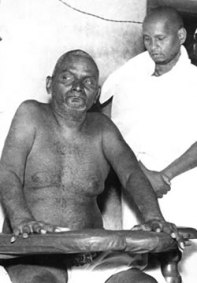
 I was an activist in the 70s for a short time. I was working for a Youth Hostel funded by the Canadian Federal Government. When the funding ended the residents took to the streets in protest. The riot police showed up ready for battle. It became violent and I began to question the effectiveness of political activism. As I watched the police brutally beat my fellow demonstrators I understood that if I was going to work for peace it would not be in politics. Fortunately I was dragged away by a friend and was not arrested. That day my spiritual search began.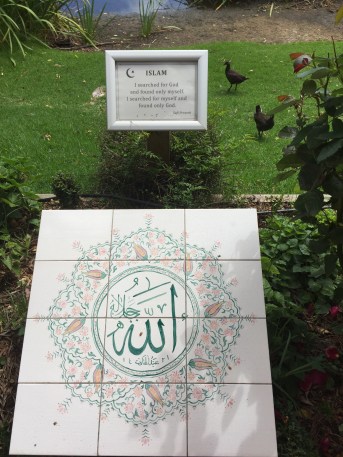
 Consciousness Is Everything:
 William Barrett is the besting novelist and author of The Lilies of the Field and The Left Hand of God. In this historical romantic drama which is subtitled, The Untold Love Story of the Buddha and His Wife he brings to light, in intimate detail, the spiritual journey of Yasodhara, the wife of Siddhartha, who becomes the Buddha. Barrett’s narrative elegantly and tenderly moves through the unfolding of her engagement and marriage and her inner process as she loses her husband to his search for enlightenment.
 Yoga School Drop-out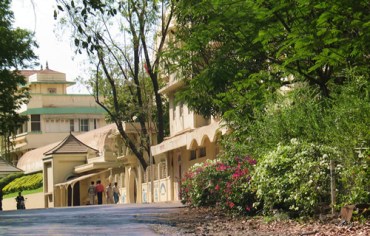
 The Voice of the Self